What If Your Family’s Safety App Actually Made You More Independent—Not Less?
You know that moment when you first downloaded a family safety app, hoping it would bring peace of mind—only to feel more tied down, constantly checking screens and worrying? You’re not alone. Many of us turn to technology seeking control, yet end up feeling more anxious. But what if used differently, these tools could actually free you? This is the story of how one app stopped being a source of stress—and started becoming a bridge to confidence, clarity, and real autonomy. It’s not about abandoning safety. It’s about reclaiming your calm, your time, and your trust—without sacrificing what matters most.
The Moment I Realized My Safety App Wasn’t Helping—It Was Holding Me Back
I remember the day I downloaded the app. My daughter had just started middle school, and the idea of her walking home with her friends—without me—felt like a tiny earthquake in my chest. I told myself I just wanted to be prepared. So I set up the family safety app, added her phone, and breathed a sigh of relief. I was being responsible. I was being a good mom. But within a week, that relief turned into a loop of tension. I’d open the app every 20 minutes. Was she still at school? Why was her phone in the library when she was supposed to be at track practice? Was she off the bus route? I wasn’t waiting for emergencies—I was chasing shadows. The app didn’t make me feel safer. It made me feel like I was always one notification away from a crisis.
And it wasn’t just me. My son started rolling his eyes when I asked, ‘Is your phone on?’ before he left the house. My husband gently suggested I ‘chill out’ when I mentioned checking my daughter’s location during dinner. I wasn’t protecting anyone—I was creating distance. The irony hit me hard: I’d downloaded this tool to feel closer to my family, and instead, I was building walls of worry. I began losing sleep, not because anything bad had happened, but because I couldn’t stop imagining what might. That’s when I realized—the app wasn’t the problem. I was using it wrong. And worse, I was teaching my kids that trust had to be earned through constant surveillance, not through love and consistency.
What I didn’t know then was how common this is. So many of us download these tools with the best intentions—only to get caught in a cycle of digital overcare. We think we’re being vigilant, but we’re actually feeding our anxiety. The app wasn’t making me more in control. It was making me more dependent on checking, more reactive, and less present. I wanted to protect my family. But in doing so, I was sacrificing my own peace—and maybe even their independence.
Why So Many of Us Get Stuck in Digital Overcare
Let’s be honest—no one downloads a family safety app because they want to spy. We do it because we care. Because we lie awake wondering if our teenager made it to the party safely. Because we remember how we used to call our parents from a payphone and feel that little knot in our stomach until we heard their voice. That love, that deep desire to protect, is beautiful. But it can also quietly morph into something heavier—something that feels less like care and more like control.
I started noticing how often I’d open the app without even thinking. Waiting in the school pickup line, I’d check my son’s location even though I could see the school building. On a Saturday morning, I’d refresh the screen while making pancakes, just to confirm my daughter was still at her friend’s house. It wasn’t about safety anymore. It was a habit—a digital reflex. And I wasn’t alone. A friend confessed she checks her husband’s location during his work commute, not because she doubts him, but because ‘it just feels weird not to.’ Another mom admitted she tracks her college freshman ‘just in case,’ even though he lives 200 miles away. These aren’t stories of distrust. They’re stories of love tangled up with fear.
The truth is, our brains are wired to respond to uncertainty with action. When we can’t see our loved ones, our minds fill in the blanks—and often, those blanks are filled with worst-case scenarios. The safety app offers a solution: instant visibility. But that visibility comes at a cost. Every ping, every location update, every ‘off-route’ alert feeds a cycle of hyper-vigilance. We think we’re staying connected, but we’re actually outsourcing our emotional regulation to a screen. Instead of learning to sit with the normal discomfort of separation, we reach for the app. And over time, that small action becomes a dependency—one that erodes our confidence and our children’s sense of autonomy.
What makes this even more complicated is that these apps are designed to be engaging. They use the same psychology as social media—notifications, real-time updates, visual maps—to keep us checking. It’s not evil. It’s just effective design. But when that design meets parental love, it can create a perfect storm of overuse. We don’t need more features. We need more awareness. We need to remember that real safety isn’t about constant monitoring. It’s about preparation, communication, and trust.
The Turning Point: Learning to Trust the Tool, Not the Obsession
The shift started with a simple question: ‘What am I really afraid of?’ I sat down one evening, after yet another round of checking my daughter’s phone during dinner, and asked myself what I thought would happen if I didn’t look. Would she be in danger? Probably not. Would I feel out of control? Yes. That was the breakthrough. My anxiety wasn’t about her safety. It was about my need to feel in control. And the app had become a crutch—a way to avoid sitting with uncertainty.
So I decided to experiment. I turned off all non-urgent notifications. No more ‘location updated’ pings. No more ‘off-route’ alerts unless it was a major deviation. I set a rule: I would only check the app twice a day—once in the morning to confirm everyone left safely, and once in the evening to see they were home. And I told my family what I was doing. My daughter looked surprised. ‘You mean you won’t be watching me all day?’ she asked. My son said, ‘Cool. Does this mean you’ll stop asking if my phone’s on?’ Even my husband smiled. ‘I was going to suggest that,’ he said.
The first few days were hard. I’d catch myself reaching for my phone out of habit. But slowly, something changed. I started noticing things I’d missed—like how my daughter was more open at dinner, how my son seemed less defensive when I asked about his day. Without the constant digital check-ins, our conversations felt more genuine. I wasn’t asking, ‘Where are you?’ as much. I was asking, ‘How was your day?’ And their answers were fuller, warmer.
That’s when I realized: the app wasn’t the enemy. My relationship with it was. When I used it obsessively, it amplified my anxiety and created distance. But when I used it intentionally, it could support us—without taking over. I wasn’t giving up on safety. I was upgrading it. I was choosing trust over tracking, presence over pings. And that made all the difference.
How I Reprogrammed the App to Support Autonomy—Not Anxiety
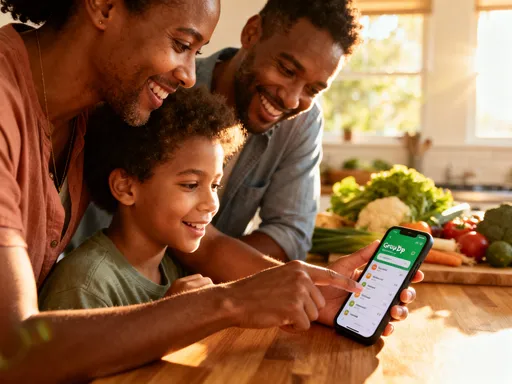
Once I decided to change my approach, I went into the app settings with a new mindset. Instead of asking, ‘What can this app do?’ I asked, ‘What do we actually need?’ I started by simplifying. I turned off location sharing during school hours—unless there was an emergency. I set up geofenced alerts only for key moments: when my son left school in the afternoon, when my daughter arrived at her music lesson, when my husband reached the gym after work. These weren’t constant updates—just gentle nudges at natural transition points.
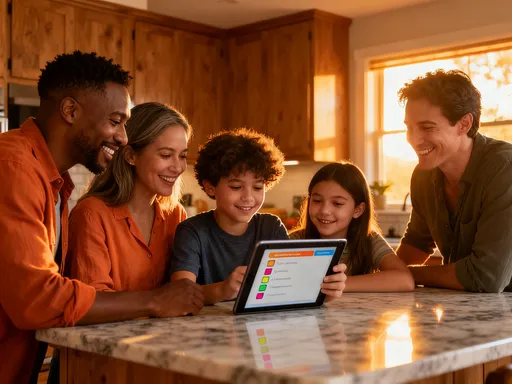
I also created a ‘family check-in’ routine. We agreed that each person would send a quick text when they arrived somewhere important—home, a friend’s house, practice. No pressure. No tracking required. It became a habit, like saying ‘I love you’ before hanging up. And for emergencies, I kept the panic button active—but I made sure everyone knew how to use it, not just me. I practiced with my kids: ‘If you ever feel unsafe, press this. I’ll get an alert and your location. But don’t use it for lost phones or forgotten homework.’ It wasn’t about control. It was about empowerment.
One of the most powerful changes was setting up ‘quiet hours.’ From 7 p.m. to 7 a.m., the app went silent—no location updates, no alerts, unless it was an emergency. This gave everyone space, especially my teens, to feel trusted and respected. I also disabled the ‘last seen’ feature. I didn’t need to know when their phones were active. I needed to know they were safe.
The biggest lesson? Less is more. I didn’t need every feature. I didn’t need to know every movement. What I needed was a safety net—not a spotlight. By customizing the app to fit our real lives, not my fears, I transformed it from a source of stress into a quiet ally. It wasn’t watching them. It was watching for us.
The Unexpected Gift: More Trust, More Freedom, More Peace
The changes didn’t happen overnight, but the shift was real. I started sleeping better. I wasn’t waking up to check locations. I was waking up feeling rested. My kids noticed, too. My daughter began sharing more—about her friends, her worries, her dreams. ‘I don’t feel like you’re watching me anymore,’ she said one night. ‘It feels like you actually listen.’ That hit me right in the heart.
My son started leaving the house without me asking about his phone. He knew the plan. He knew how to reach us. He knew he was trusted. And that trust made him more responsible, not less. One afternoon, he called to say he was staying late at school for a club meeting. No app alert. No location ping. Just a text. And I didn’t panic. I said, ‘Sounds fun. Text me when you’re on your way.’ That moment felt like a victory—not because he followed the rule, but because we both felt calm.
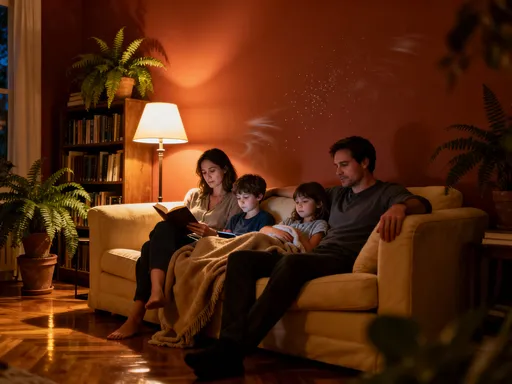
Even my marriage felt lighter. My husband and I stopped having the ‘you’re checking too much’ conversation. Instead, we talked about how we could support each other’s independence. We started planning small adventures—just the two of us—without needing to report every step. The app was still there, but it wasn’t running the show. It was in the background, like a seatbelt—there when needed, invisible when not.
The peace I found wasn’t from knowing where everyone was. It was from knowing we had a system built on respect, not surveillance. The app didn’t create trust. We did. But it could support it—if we used it wisely. And that made all the difference.
How You Can Make the Same Shift—Without Starting from Scratch
If you’re feeling stuck in the same cycle, I want you to know—you’re not failing. You’re caring. And that’s not a flaw. But it might be time to recalibrate. Start small. Try a ‘digital detox day’—one day where you don’t open the app at all. Notice how you feel. Do you feel anxious? Curious? Relieved? Use that awareness to guide your next steps.
Then, have a family conversation. Not a lecture. A real talk. Ask your kids or partner: ‘How do you feel about the app? Do you feel watched? Do you feel safer?’ Listen without defending. You might be surprised by what you hear. Use that feedback to adjust the settings together. Make it a shared agreement, not a top-down rule.
Next, simplify. Turn off what you don’t truly need. Keep only the alerts that matter—like arrival at school or home. Set quiet hours. Encourage natural check-ins through texts or calls. Make the app a backup, not the primary way you stay connected.
And most importantly, practice letting go. When you feel the urge to check, pause. Breathe. Ask yourself: ‘What am I really afraid of?’ More often than not, the answer isn’t danger. It’s uncertainty. And that’s okay. You don’t have to control everything to keep your family safe. Sometimes, the bravest thing you can do is trust.
Technology That Serves You—Not the Other Way Around
Here’s what I’ve learned: technology isn’t the problem. It’s how we use it. Family safety apps aren’t inherently good or bad. They’re tools. And like any tool, their value depends on the hand that holds them. When used with fear, they can become digital leashes. But when used with intention, they can become bridges—to freedom, to trust, to peace.
You don’t have to choose between safety and independence. You can have both. You can know your child is safe without watching their every move. You can feel connected without constant updates. You can protect your family without losing yourself in the process.
The real goal isn’t to monitor more. It’s to worry less. It’s to build a home where love isn’t measured by how often you check, but by how deeply you listen. Where safety isn’t about control, but about preparation and trust. Where technology doesn’t replace human connection—it supports it.
So if you’ve been feeling overwhelmed by your safety app, I’m here to tell you: it’s not too late to change. You’re not behind. You’re not failing. You’re learning. And that’s where real growth begins. You can have peace of mind without losing your peace of heart. You can use technology to lift you up—without letting it weigh you down. Because the most powerful safety feature of all isn’t in the app. It’s in you.